Capturing the Decisive Moment: How Wedding Photographers Train Their Eye for Unrepeatable Shots
In wedding photography, the defining moments last only a fraction of a second—and there are no second takes. By Ryan Mayiras, with photos by Candid Studios.
There is a photograph by Henri Cartier-Bresson of a man leaping over a puddle behind the Gare Saint-Lazare. The man is suspended mid-air, his reflection caught perfectly in the water below. Cartier-Bresson did not ask him to jump again. He did not adjust his settings and wait for the next person. He saw the moment forming, raised his camera, and pressed the shutter at precisely the right instant.
He called this le moment décisif — the decisive moment.
It is a concept that wildlife photographers understand intuitively. You might spend hours in a hide, watching a kingfisher perch above a river, waiting for the split second it dives. You cannot direct the bird. You cannot ask it to repeat the performance. You read the environment, anticipate the behaviour, and react faster than conscious thought allows. I have spent years applying this same philosophy as a wedding photographer in Miami and across five other US states — and the lesson never changes.
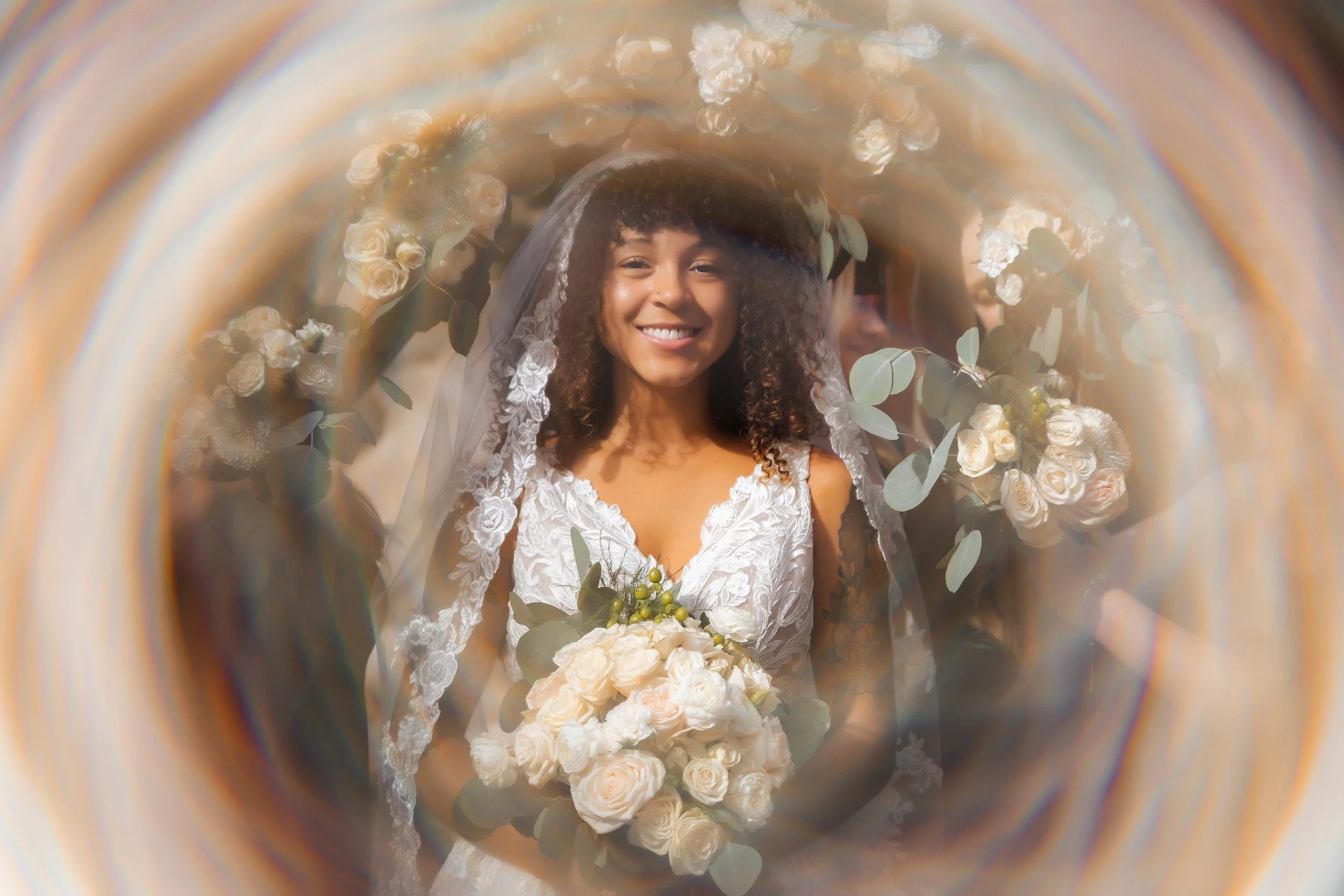
Wedding photography demands the same discipline — compressed into a day of shifting light, unpredictable emotion, and moments that will never happen again. The father who tears up during his daughter's vows. The flower girl who trips and laughs it off. The look between two people in the seconds before they are declared married. These moments are singular, and the photographer who captures them is the one who saw them coming before they arrived.
This article explores the skills, techniques, and mindset that separate a competent wedding photographer from one who consistently captures the unrepeatable.
Reading the Room — Anticipation as a Core Skill
The most important quality in a wedding photographer is not technical proficiency — it is the ability to predict what is about to happen.
Every wedding has a rhythm. The ceremony builds toward emotional peaks. Toasts are followed by laughter or tears. The first dance has its crescendo. The cake cutting produces reactions. The photographer who understands this rhythm positions themselves not where the moment is, but where it will be.
This is what sports photographers call "pre-visualisation" — the practice of seeing the shot in your mind before it exists in reality. A wedding photographer who has shot two hundred receptions knows that the best man's speech will produce a reaction from the bride. She does not watch the best man. She watches the bride's face.
Positioning is everything — the best wedding photographers anticipate where the moment will unfold and get there first.
The parallel to wildlife photography is striking. A photographer tracking a pride of lions learns to read body language: the flick of an ear, a shift in posture, the way a lioness focuses on distant prey. These micro-signals precede action. At a wedding reception, the signals are different — a trembling hand gripping a champagne flute, a grandmother dabbing her eyes during the father-daughter dance, a groomsman reaching into his pocket for the ring — but the skill is identical: observation leading to anticipation leading to the shutter.
Practical techniques for building this instinct:
Arrive early and observe. Before the ceremony begins, walk the venue. Note the lighting, the sight lines, the likely focal points. Where will the officiant stand? Where will the family sit? Which angle captures the couple's faces during the vows?
Watch faces, not actions. The most powerful wedding photographs are reactions, not performances. Train yourself to look at the people watching the moment, not the moment itself. The mother's face during the veil adjustment is worth more than the veil itself.
Position for what comes next. If the father of the bride is about to give a toast, move to where you can see both him and the couple. The reaction shot is nearly always more valuable than the action shot.
Learn the programme. Meet the wedding planner. Study the order of service. Know when the emotional peaks will come so you are not caught changing lenses or checking your settings.
Technical Settings for the Wedding Day
Anticipation gets you into position. Technical competence ensures the shot is sharp when you press the shutter.
Weddings are notoriously challenging environments: dim churches, bright outdoor ceremonies, mixed artificial lighting at receptions, fairy lights and candles in the evening. The photographer who fumbles with settings misses the moment — and at a wedding, there is no retake.
Shutter speed is the non-negotiable priority. For any scene involving movement — the processional, the first dance, confetti thrown in the air — a minimum of 1/250s is essential. For fast action like a bouquet toss or a dance floor spin, push to 1/500s or faster. Motion blur in a candid wedding shot rarely reads as artistic; it reads as a mistake.
ISO management has become significantly easier with modern sensors. Do not be afraid of high ISO values. A sharp photograph of the first kiss at ISO 6400 is infinitely more valuable than a blurry one at ISO 400. Set your camera to Auto ISO with a ceiling (12800 is a reasonable limit on most modern bodies) and let the camera handle the exposure while you focus on composition and timing.
Autofocus configuration is where many wedding photographers lose critical shots. Single-point AF is too slow when the bride is walking down the aisle and guests are leaning into the frame. Switch to continuous autofocus (AF-C on Nikon, AI Servo on Canon) and use a cluster of focus points rather than a single one. Back-button focus — decoupling the autofocus from the shutter button — gives you the flexibility to lock focus and recompose without the camera hunting when you half-press the shutter.
Lens selection shapes the character of your coverage:
70-200mm f/2.8: The workhorse for ceremonies. It lets you capture the exchange of rings from the back of the church without intruding. Essential for candid moments during speeches and toasts.
35mm f/1.4 or f/1.8: For environmental storytelling — the couple framed within the grandeur of the venue, the getting-ready chaos of the bridal suite, the wide dance floor scene.
24-70mm f/2.8: The versatile middle ground for reception work, group shots, and detail photographs of the rings, flowers, and table settings.
Wildlife photographers will recognise these challenges immediately: low light, fast movement, and subjects that do not take direction. The difference is the emotional stakes. Nobody is disappointed if a wildlife photographer misses a kingfisher dive — the bird will return. A missed first kiss or a botched ring exchange photograph is gone forever.
The Art of Being Invisible
The most powerful wedding photographs happen when subjects forget the camera is there.
The photographs that couples treasure most — the ones they frame, share, and show their children decades later — are almost never the posed group shots. They are the unguarded moments: a stolen glance across the aisle, a quiet laugh during the speeches, a hand reaching for another hand beneath the table.
Capturing these requires the photographer to become invisible.
This is partly technical. A longer lens (the 70-200mm earns its weight here) allows you to shoot from a distance that does not alter behaviour. Shooting from the hip — composing roughly without raising the camera to your eye — produces surprisingly usable results with practice and removes the visual cue that triggers self-consciousness. A quiet shutter mode, available on most mirrorless bodies, eliminates the mechanical sound that draws attention during the ceremony.
But invisibility is mostly behavioural. It is about how you carry yourself. Move slowly and deliberately. Do not make eye contact with subjects you are photographing. Position yourself at the edges of groups rather than the centre. Dress to match the formality of the event. The moment a guest notices the camera, their expression changes — and the authentic moment is lost.
This is something I have seen consistently across thousands of weddings, regardless of the venue or location. The most powerful images come from moments people did not know were being captured. The candid laugh during a quiet conversation between the couple. The look a father gives his daughter when he thinks no one is watching. The flower girl yawning during the ceremony. These unscripted, unposed, unguarded fractions of a second tell the real story of the day.
Wildlife photographers understand this instinctively. The most compelling animal behaviour occurs when the subject is unaware of the camera. The same is true of wedding guests. Your job is not to direct the moment — it is to be ready when it happens.
Post-Processing Wedding Photographs — Less Is More
There is a temptation, particularly with wedding photographs, to over-process in post. Resist it.
The power of a candid wedding moment lies in its authenticity. Heavy-handed editing — excessive skin smoothing, dramatic colour grading, aggressive vignetting — undermines the very quality that makes the image compelling. The viewer senses artifice, even if they cannot articulate it, and the emotional connection weakens. Couples looking back at their wedding photographs in twenty years will appreciate timeless processing far more than whatever editing trend was fashionable in 2026.
A reliable Lightroom workflow for wedding candids:
Exposure correction. Weddings produce wildly inconsistent lighting — bright ceremony, dim reception, candle-lit dinner. Bring the exposure to where it should be, paying particular attention to skin tones.
White balance. Mixed lighting (tungsten overheads, LED uplighters, daylight from windows, warm fairy lights) creates colour casts that look natural to the eye but unpleasant in photographs. Correct the white balance to produce clean, neutral tones.
Gentle contrast. A slight S-curve in the tone curve adds depth without making the image look processed. Lift the blacks marginally to create a slightly faded aesthetic that suits candid work.
Noise reduction. High-ISO reception shots benefit from luminance noise reduction, but apply it conservatively. Some grain adds to the documentary feel and can even enhance the atmosphere of a dimly lit dance floor.
Crop for composition. Candid shots are rarely composed perfectly in-camera. Cropping to remove a distracting exit sign at the edge of the frame or to improve the compositional balance is not a compromise — it is part of the process.
Black and white strips away distraction, leaving only the raw emotion of the moment.
Black and white conversion deserves special mention. Emotional moments — the tears during the vows, the embrace after the ceremony, a grandparent watching from the back row — often benefit enormously from the removal of colour. Without colour, the viewer's attention is drawn entirely to expression, gesture, and light. It is a powerful tool, but use it with intention rather than as a default. Not every candid shot earns black and white; reserve it for images where the emotion is strong enough to carry the frame on its own.
Building a Narrative — Telling the Story of a Wedding Day
A collection of strong individual images is not, by itself, a complete piece of work. The wedding photographer's ultimate goal is narrative: telling the story of the day from beginning to end.
Think of it as a visual arc:
Establishing shots set the scene — the venue at dawn, the dress hanging in the window, the empty ceremony space before the chairs are filled.
Preparation shots build anticipation — the getting-ready chaos, the nervous laughter, the final adjustments.
Detail shots add texture — the rings on a love letter, the bouquet, the hand-written vows, the table settings.
Ceremony shots form the spine — the processional, the vows, the first kiss, the recessional.
Reaction shots provide the emotional weight — the mother's tears, the best man's relief after his speech, the flower girl's boredom.
Celebration shots capture the joy — the dance floor, the toasts, the sparkler exit, the stolen moment when the couple finally exhales.
This structure gives the couple more than a collection of photographs. It gives them a story they can revisit and relive. And it is a discipline that improves every aspect of your shooting, because it forces you to think beyond the individual frame and consider how each image serves the larger narrative.
Whether you are tracking a leopard through the Masai Mara or following a bride down the aisle, the craft is the same: patience, anticipation, and the courage to press the shutter at exactly the right moment. The decisive moment does not announce itself. It does not wait for you to be ready. It rewards the photographer who has put in the hours — not just of practice, but of observation, preparation, and presence.
The moment is always coming. The question is whether you will be ready for it.
Ryan Mayiras is the founder of a photography and videography company that has covered over 3,000 weddings and events across six US states. When not behind a camera, he builds tools that help creative businesses work smarter.
If you’d like to order a framed print of one of my wildlife photographs, please visit the Prints page.
If you’d like to book a lesson or order an online photography course, please visit my Lessons and Courses pages.