How to Teach Wildlife Photography
Cast your net wide…
Eddie the Penguin
Being a wildlife photographer doesn’t pay much, so most of us have to turn our hands to any related activities that might pay the bills! One of those is teaching. There are many ways to teach wildlife photography, including blogs, books, talks, workshops, private lessons and safaris. Let’s have a look at each in turn, followed by a few hints and tips…
Blogs
Hard at work…!
One of the good things about the advent of the internet is that it provided any writer with the chance to get published for free. In the bad old days, you had to have a job as a newspaper journalist or a publishing contract to be able to share your opinions with the world. These days, you just need Wi-Fi…!
I’ve been writing this blog since January 2013 after I came back from what turned out to be my very first trip as a wildlife photographer. Initially, I only wrote the occasional article about my expeditions or exhibitions, but I quickly got into the habit of writing and publishing a weekly post every Saturday morning.
I now post about lots of different categories, including Equipment, Trips, and Hints and Tips, and my blog provides me with a great chance to reach a worldwide audience and help budding photographers capture award-winning images and even turn professional.
I try to write all my blog posts without the use of AI, partly because it doesn’t ‘sound like me’, partly because it’s rubbish at providing detailed camera specifications and partly because I want to create original content rather than summarising everything that everybody else has ever said on the subject! However, Gemini or another AI tool can be useful in helping structure my articles and making sure I don’t leave out anything crucial.
It’s taken a long time to build an audience, but I’m now getting around 50,000 unique visitors a month, and my top blog posts get thousands of monthly views. My Top 10 Birds received 4.5k views in the last 30 days, and my Domain Authority (DA) has risen to 34. It’s a long, hard road, but I’m getting there…!
One recent benefit of writing my blog is that people have started paying me to publish guest posts. They must obviously think it’s worth it in terms of the traffic stats and brand reputation, which is always nice. I charge £50 for each guest post plus £10 per dofollow link (and 10% to cover PayPal fees), and it all adds up. I only sold my first guest post in April 2025, but I’m already making nearly £800 a month in publishing fees!
The financially and mathematically literate amongst you might have noticed that 60-odd quid a week only adds up to around £250 a month, and you’d be right! However, I get so many requests these days that I regularly publish three or four articles a week. In fact, some clients can’t even wait until the weekend, so I need to post midweek just to suit their timeframes.
The only downside to publishing so many guest posts is that I hardly write anything myself these days! However, that’s a nice problem to have, isn’t it…?
Books
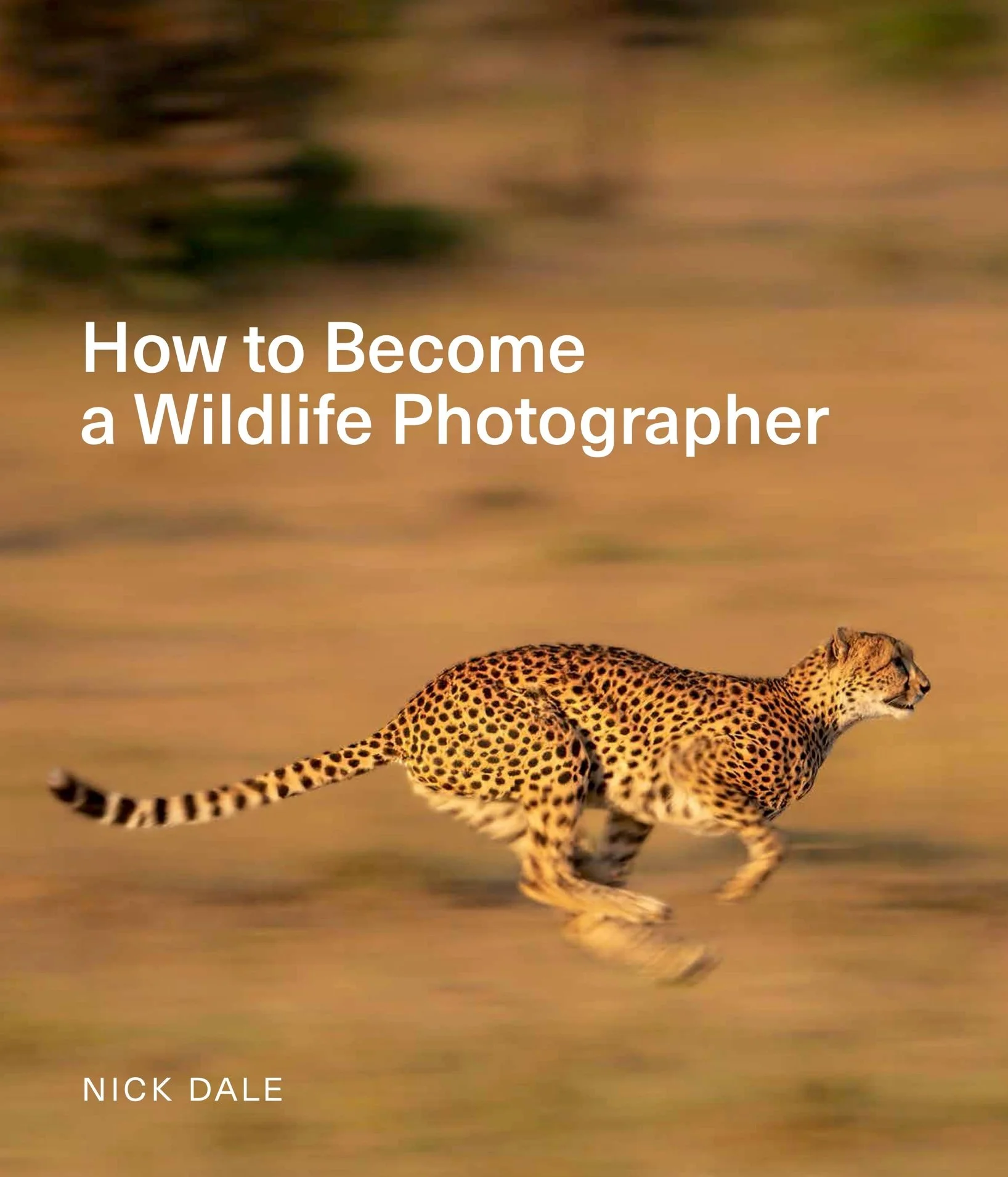
My latest ebook…
Whatever I just wrote about writing a blog counts double for writing a book. It used to be incredibly difficult to make it as an author. You had to spend months writing an outline, a chapter or even the whole book before spending even more time researching and contacting literary agents and publishing houses. And at the end of the day, the decision to publish wasn’t yours to make. It depended on people you’d probably never met in your entire life!
Well, that was then, and this is now. These days, it’s relatively cheap and easy to self-publish a book, and I’ve done so on numerous occasions. It’s also possible to publish ebooks, which dramatically lowers the cost of entry and, in fact, gave me my first opportunity as a published author.
It all happened by accident when I happened to notice a post on Facebook that a friend must’ve ‘liked’ about becoming an author or a presenter for Expert Photography. This is the most popular photography-related website in the world, and it was looking for ebooks on various subjects.
I applied immediately, but I didn’t hear back for a couple of weeks. In the meantime, I brought together my ideas for an ebook on wildlife photography. I’d published dozens of blog posts about it, and I obviously knew the subject inside-out, so it was quite easy to cut and paste everything together. In the end, it only took me three days to write the first draft—as I never tire of telling people!
When Expert Photography finally contacted me, I was asked to write an ebook on wildlife photography. As I already had my manuscript, I sent it off immediately. They were so impressed that they asked me to write another ebook on social media for photographers.
In the end, Expert Photography published Social Success Strategies before Wonderful Wildlife, but over 1,000 people bought copies, and I got regular royalty payments for a few months as well as a hefty advance.
The Expert Photography deal I signed meant that I couldn’t write another book on wildlife photography for at least five years, but when that period was up, I immediately set about writing another one. This time, the impetus came from a random email from a printer who wanted to help me crowd-fund a proper, coffee-table book on wildlife photography.
We came to an agreement, and the printer put a lot of time and effort into putting together the numbers and trying to get it off the ground. Unfortunately, it was too hard to get the advance orders we needed to cover the publishing and distribution costs, and he couldn’t even raise any sponsorship. As a result, we had to can the project.
However, I’d written a first draft as part of the process, so I still had all the text and images I needed to publish it as an ebook, which I called How to Become a Wildlife Photographer. It’s now on sale on my Books page and also on Amazon (in the UK, USA and around the world).
Talks
Meeting the fans…!
Talks are the verbal equivalent of books and articles. If you know your stuff and think you have a good enough portfolio of wildlife images, it’s easy enough to email camera clubs or other local organisations to see if they’re looking for a guest speaker.
I’ve given talks at The Societies 2022 Photo Convention and online (see video), The Athenaeum Club (for the Oxford University Society), Grumeti Serengeti Tented Camp, Cottar’s 1920s Safari Camp, the SW19 Women's Institute, the Putney Women’s Institute, Malden Camera Club, Watford Camera Club, Putney Library, Beckenham Photographic Society and on two Antarctic cruise ships.
Nowadays, events are increasingly online, and I’ve hosted various webinars for the London Institute of Photography (see video), PhotoWhoa, Wildlife Focal and the Nature Photographers Network.
Again, this is not necessarily the pot of gold at the end of the rainbow, but every little helps! I enjoy being ‘on stage’—literally and figuratively!—and if you have the right crowd, it can be very satisfying to show off my work and then drink copious amounts of champagne while fielding copious amounts of compliments! (No, it’s not really like that, but you get the idea…)
Workshops
“Left a bit, right a bit…”
Another way you can get paid for teaching is by leading photography workshops. I’ve been hosting sessions at the London Wetland Centre since May 2021, first in association with Handmade Workshops and now independently. I hold them on the last Saturday of every month, and I advertise them on my Workshops page and also on Eventbrite.
The sessions run from 1000-1400, and I teach people the theory and practice behind great wildlife photography. After a slideshow and talk in the café, they get a chance to take pictures at the otter feeding and various hides and ponds to capture the local birdlife. Finally, we all meet back in the café for a review with feedback—and a mystery prize for the best photo! I charge £100, and that includes a free day pass to the London Wetland Centre worth up to £19.95.
Unfortunately, workshops aren’t a great money-spinner. I had to pay Handmade Workshops a commission, the London Wetland Centre also asks for a £100 annual fee and I’ve never had more than a handful of sign-ups. However, the location is only a 15-minute cycle ride away, and it’s almost the only chance I get now to talk to people in person about photography!
Private Lessons
It’s important to have a laugh…
Private lessons are very similar to workshops—although they’re obviously not scheduled on a regular basis. I teach either online or in person, but I struggle to find suitable local venues apart from the London Wetland Centre. The Royal Parks ban any commercial activity, so Richmond Park and Bushy Park are out, and it’s hard to go further afield without my own car.
Not many people book private photography lessons with me, and what bookings I do get are very sporadic and ‘lumpy’. Sometimes, a client wants a batch of half a dozen lessons over a few weeks or even a few days, but that’s the exception rather than the rule. I charge £100 an hour, but I also offer a half-price discount for half-day or full-day sessions.
When it comes to the content of the lessons, I’m always flexible as it depends on the clients’ needs, but I often take people to the London Wetland Centre and effectively go through my usual workshop routine. If clients live abroad, I can do an online portfolio review easily enough, but that rarely happens.
Safaris
Welcome image from Savara Trails
The one thing I haven’t done—yet!—as a wildlife photographer is lead a safari. That’s the ultimate chance to teach people wildlife photography in the best possible environment. Two-thirds of my foreign trips are to Africa, but a ‘safari’ can be anywhere in the world—as long as you have access to great wildlife sightings.
I’ve been on over 500 game drives and boat rides over the years, and I’d love to lead a trip to photograph cheetahs catching gazelles in Kenya, brown bears catching salmon in Alaska or jaguars catching caiman in the Brazilian Pantanal. (As you can tell, I love action shots of the big predators…!)
Andy Skillen is an experienced wildlife photographer, and he once advised me to take a booth at the Luxury Travel Fair to buy hot prospects who were on the point of booking a safari, but that would cost a few thousand pounds that I didn’t have in my bank account at the time!
However, the prospect of leading a trip came a lot closer a few weeks ago when I received a random email from an Indian start-up called Savara Trails. The founders were busy gathering photographers to lead potential safaris to Kenya, India and Borneo, and I was lucky enough to make the list!
I’ve had a few Zoom calls with Savara and signed a contract that covers all the terms and conditions. However, the proof of the pudding will be in the eating. Can Savara put enough bums on seats to allow me to lead one of their safaris? We’ll just have to wait and see…
Hints and Tips
Here I am (in the passenger seat), doing what I do best…!
Having covered the different opportunities for teaching wildlife photography, I should probably talk a bit about how to do it…!
Apart from knowing all about aperture, shutter speed, ISO and all the rest of the photography jargon, I guess the most important thing to ask yourself is whether you have the right personality type. People often say to me, “Oh, you must be so patient to be a teacher!” That’s true, I suppose, but I was born patient. That’s just who I am! I enjoy helping people to improve their skills, whether that’s in photography, tennis or golf, and I never worry about how long it takes them to get the message.
Guests on safari often have very different levels of ability. Some come with two camera bodies and long lenses worth thousands of pounds while others come with an iPhone and a shrug of embarrassment! However, I always focus on progress rather than ability. To me, you don’t have to be a professional photographer to take professional wildlife shots. You just need decent gear, a decent location and a decent grasp of the fundamentals.
One of the ways you can become a better teacher is by listening to your students needs. You may have a carefully worked-out plan for the day, but if people don’t know what settings to use or how to set up their camera, then it’ll be a complete waste of time!
Another good habit is to leave your camera at home. I’ve been on many safaris where the guide is effectively just another one of the guests. He—and it’s almost always a he!—gets in the safari truck with everyone else and takes pictures with everyone else but rarely gives anyone else any help as he’s so obsessed with taking photos himself. That’s just the way it’s done.
However, when people come to my workshops, I tell them I didn’t bring my own camera as it’s not about me—it’s about them. As I’m not taking any shots myself, I can devote 100% of my attention to my students—and that’s as it should be.
One thing that makes it harder to teach people is the variety of camera brands. I’ve used Nikon and Sony equipment my whole career, but I’ve never used a Canon camera, so it’s sometimes tricky to answer specific questions about how to set up an R5 or an R1. I’ve reviewed a few Canon models over the years for Expert Photography, but I’m not as familiar with all the controls as I’d like, so my best option is often a Google search!
Another tip for keeping people happy is to give them agency—especially on safari. I’ve been on far too many game drives where guests just let their guides drive wherever they want. They have no idea where they are or what they’re going to see. They just rely on their guides to find something interesting for them to photograph!
That doesn’t do it for me, and I always try to have a chat with my guides to find out the best places to go and keep track of what they’re trying to find. That gives me a lot more control over my experience and a chance to change my mind if I want to do something else. If there are other guests in the vehicle with me, I often advise them to do the same.
Now, you might say that you can’t guarantee seeing a lion, a leopard or a cheetah on safari, but that’s only partly true. When I visited Cottar’s 1920s Camp back in 2019, I noticed immediately that the drivers always asked the guests what they wanted to see. I thought at first they were joking, but then I realised they wanted to know which animals or birds their guests thought were the priority so that they could go to the right places to find them.
It doesn’t always work, of course, but it’s still true that you’re most likely to see lions under a tree, leopards up a tree and cheetahs where there aren’t any trees at all!
Finally, it’s important to know the level of your students. I always ask mine whether they’re beginner, intermediate or advanced. Nobody claims to be advanced—they’re all far too British for that!—but it’s useful for me to know how much I need to explain. For example, some people know about the exposure triangle, and some don’t. If I know how much technical detail is needed, it makes it much easier for me to teach—and I’m much less likely to bore people to tears or treat them like idiots!
Verdict
Smile for the camera!
I love teaching—whatever the topic. I love helping people to improve their knowledge and skills, and it gives me a real thrill to see them develop and progress. If that’s how you feel about wildlife photography, I suggest you cast your net as widely as possible.
Setting up a blog is free and easy, and self-publishing a book is much cheaper and easier than it used to be. Giving talks means doing a few hours’ research into camera clubs, say, and sending a handful of emails to the ones you think might book you. Holding workshops and private lessons is a bit trickier and requires a suitable local venue and the ability to put bums on seats, but it’s possible—and I’ve done it myself.
The final challenge is being able to lead a photographic trip overseas. I haven’t done it yet, but I’m hoping Savara Trails will give me that opportunity. Watch this space…!
If you’d like to order a framed print of one of my wildlife photographs, please visit the Prints page.
If you’d like to book a lesson or order an online photography course, please visit my Lessons and Courses pages.