Paris Proposal Photographer: Why Night Sessions Beat Sunset Every Time
Guest post
The image of a golden sunset behind the Eiffel Tower is perhaps the most enduring cliché of the French capital. For many people planning a life-changing moment with their partner, the "Golden Hour" seems like the ultimate requirement. However, seasoned experts in the field suggest a different reality. Choosing a specialised Paris proposal photographer often reveals that the city's true romantic potential awakens only after the sun has vanished.
While sunset is often a gamble against the city's unpredictable Atlantic climate, the Parisian night offers a consistent, theatrical, and high-contrast stage that transforms a simple question into a cinematic masterpiece. This shift from daylight to twilight is not merely a stylistic choice; it is a strategic decision that affects everything from crowd management to the technical quality of the final photographs. It’s a perspective shaped by hundreds of real-world experiences, prioritising guaranteed magic over a hopeful possibility.
Myth #1: The Sunset Offers the Perfect Romantic Light
The main misconception among those planning their trip is that a Parisian sunset is a consistently spectacular phenomenon. In reality, the "Golden Hour" in the City of Light is an elusive guest. Unlike the reliable sunsets of the Mediterranean or the Caribbean, the sky over the Seine is frequently heavy with low-hanging clouds.
For a proposal photography specialist, a grey sunset is one of the most difficult conditions to manage. The light is flat, the colours are muted, and the romantic warmth the couple expects is often nowhere to be found. Statistically, a truly vibrant sunset occurs only a handful of times per month, depending heavily on the season. Relying on this brief window can therefore lead to disappointment when the reality is a dull, overcast evening that fails to create the magical atmosphere expected for such a significant moment.
Contrast this with the absolute reliability of the night. Every single evening, at the top of the hour, the Eiffel Tower erupts into a five-minute display of shimmering gold light. This is something that almost no weather condition—except perhaps very dense fog—can take away.
When the sun goes down, the artificial illumination of the city creates a "guaranteed aesthetic." Experienced planners often explain to guests that while they cannot control the sun, they can perfectly synchronise a proposal with the Tower’s sparkle. This predictability allows the focus to shift away from worrying about the horizon and towards experiencing the emotion of the moment, knowing that the backdrop will still be spectacular. It removes a significant variable of stress from an already nerve-wracking day.
Furthermore, the night provides a specific colour palette that daylight cannot replicate. The deep blues of the Parisian sky, combined with the warm amber of the street lamps and the brilliant white sparkle of the Eiffel Tower, create a visually striking, professional-quality contrast.
A skilled photographer uses this darkness to isolate the couple from their surroundings. In daylight, everything is visible, which can be distracting and can diminish the sense of intimacy. At night, the darkness acts as a natural frame, ensuring that the only two people who matter are perfectly highlighted against a dreamy, bokeh-filled background of city lights. It is the difference between a simple candid snapshot and a polished, cinematic memory.
Myth #2: Paris is Peaceful as the Sun Goes Down
There is a romantic notion that as the sun dips below the buildings, the city falls into a quiet hush. The truth is quite the opposite.
In Paris, sunset is prime time for the deeply rooted culture of "apéro". During the warmer months, the banks of the Seine and the public squares are teeming with locals finishing their workday, opening bottles of wine, and enjoying the last of the light. For a guest seeking an intimate, private moment, the sunset hour at a place like the Trocadéro or the Pont Bir-Hakeim can feel like proposing in the middle of a festival. The background noise and the motion of hundreds of people can easily break the fragile bubble of a marriage proposal, turning a personal milestone into a public spectacle.
The expertise of specialised planners lies in their understanding of the city's unique rhythm. They often recommend moving the proposal to the later hours—the second or third sparkle of the night, perhaps at 10.00 pm or 11.00 pm. By this time, the "apéro" crowds have moved into bars and restaurants, leaving the most iconic viewpoints surprisingly vacant and serene.
This "after-hours" strategy provides a sense of exclusive access to the city's most beautiful vistas. Imagine standing on a bridge or secluded balcony, with only the distant hum of the city and your partner’s heartfelt reaction breaking the silence. The photographer can then capture the scene without constantly having to avoid tourists or remove passers-by from the background, preserving the intimacy of the moment.
Choosing the night over the sunset is also a way to avoid the visual clichés associated with mass tourism. While the Trocadéro esplanade is arguably the most famous spot in the city, it is also the most saturated.
This is why top-tier planning agencies avoid these overcrowded public spaces for the proposal moment itself, preferring to use the night to find "secret" angles where the Eiffel Tower remains the star, but the couple feels like they are the only ones left in Paris. This nocturnal solitude adds a layer of weight and gravity to the "Yes" that a crowded sunset simply cannot match. It makes the city feel like a private setting for the guest and their partner—an experience that feels exclusive and deeply personal.
The Technical Mastery of a Night-Time Proposal
One of the reasons many amateurs avoid night photography is the sheer technical difficulty it presents. To the uninitiated, night means "darkness," but to a professional capturing Parisian engagements, night is an opportunity to sculpt light.
Taking photographs at 11.00 pm requires a completely different skill set from taking them at 4.00 pm. It involves a deep understanding of camera sensors, aperture, and the delicate balance between ambient light and artificial sources. An expert does not simply "take" a photograph in these conditions; they carefully construct it using the textures and tones of the Parisian night.
A professional team uses professional, wide-aperture lenses that allow the camera to "see" more than the human eye, capturing the ambient glow of the city. But the real secret lies in the professional lighting setups that are prepared before the guest even arrives.
Instead of relying on a harsh, flattening on-camera flash—which can flatten the image and instantly spoil the romantic mood—a dedicated team uses discreet, continuous LED panels or off-camera lighting to mimic the soft glow of a film set. This ensures that the couple’s faces are perfectly illuminated, with clear eyes and warm skin tones, while the Eiffel Tower in the background remains sharp and brilliant.
Achieving this balance without losing the authentic "mood" of the night is what separates a specialised agency from a generalist freelancer.
Moreover, the night offers a unique advantage for videography. The way light reflects off the pavement—especially if it has recently rained—adds a three-dimensional quality to the footage. A seasoned professional knows that a rain-slicked Parisian street at night is actually more beautiful on camera than a dry street during the day.
The reflections of the city lights create a shimmering, painterly effect that makes the proposal video feel like a scene from a high-budget romance. This level of technical execution is why guests travel from across the globe to work with specialists who are not afraid of the dark, but rather, know how to make it work in their favour for breathtaking results.
The Difference Expert Orchestration Makes
With over 1,000 proposals orchestrated in the capital, the team at Vika Krol has seen every possible scenario. They have navigated the complexities of Parisian weather patterns and the logistical challenges of the city's most famous landmarks.
This depth of experience has led to a singular conclusion: the night is where the true, reliable magic lives. The brand has built its reputation not just for organizing events, but for creating "Yes" moments that are visually indistinguishable from luxury cinema. The studio's extensive five-star reviews are a testament to the precision with which they handle both the technical and emotional aspects of the entire proposal experience.
A leading agency’s approach is rooted in the belief that the proposer should be a guest at their own event. By taking over the entire technical burden of the night—managing the timing of the sparkles, the positioning of the lights, and the stealthy placement of the camera—the planners allow the individual to focus entirely on their partner and the words they want to say.
This is a level of service that goes far beyond simple photography. It is a complete atmospheric design. A photographer working within such a team is effectively a cinematographer for the occasion, ensuring that the lighting is flattering, the angle is iconic, and the raw emotion is captured with exceptional clarity.
One of the most appreciated aspects of this level of service is the speed of delivery. Despite the technical complexity of editing night-time shots—which requires careful colour grading to ensure the blacks are rich and the highlights are crisp without looking artificial—the team provides the first selection of photos within 24 hours.
This allows the newly engaged couple to share their news with family and friends immediately, with imagery that looks like it took weeks to produce. This combination of field experience, technical gear, and rapid turnaround is why a specialised brand remains a top choice for discerning individuals.
Why a Night Proposal Creates a Stronger Emotional Connection
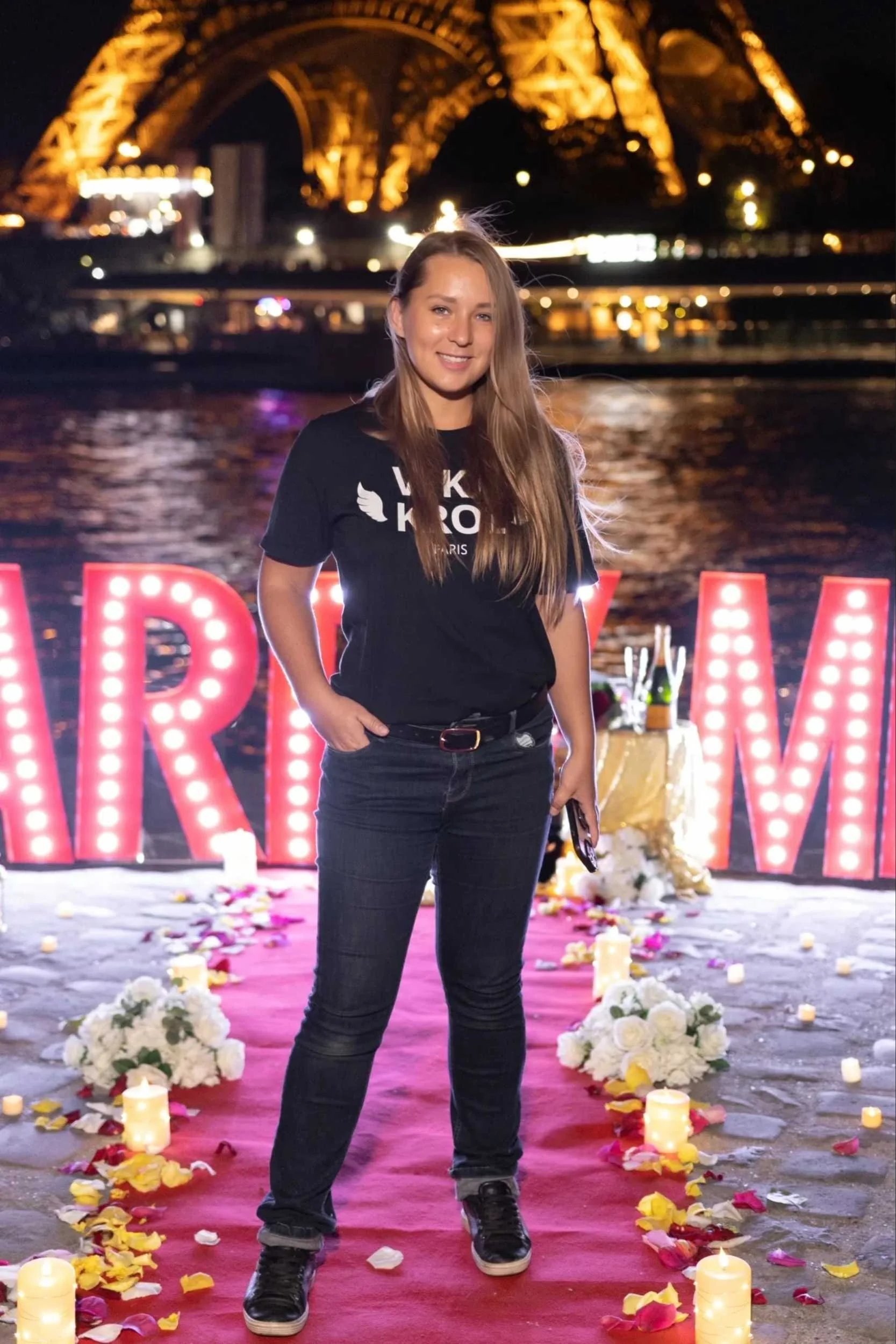
There is a psychological aspect to the night that sunset cannot replicate. When you propose in the dark, the world seems to narrow. The ambient light fades away, and the only things that exist are the two people at the centre of the frame.
This "tunnel effect" creates a profound sense of intimacy. Surrounded by the vast, dark sky and the glowing monuments, the couple feels a sense of togetherness that is often lost in the bright, busy hours of the day. The photographer captures this focus, documenting the way the couple leans into each other for warmth and connection, creating images that feel deeply personal.
The contrast between the silence of the preparation and the "explosion" of the proposal is also more significant at night. The transition from walking through a quiet, dark street to suddenly standing on a red carpet illuminated by candles and the sparkling Eiffel Tower is a sensory shock that heightens the emotional response.
Experienced planners often see more tears of joy during night proposals because the surprise is more dramatic, the reveal more theatrical. The visual impact is immediate and powerful. It is not just a proposal; it is a revelation that feels like a scene from a movie, starring just the two of them.
Finally, there is the sense of timelessness. Daylight is measured by the movement of the sun, and there is often a rush to "catch the light." At night, time feels like it stands still. Once the sun is down, the lighting remains consistent for hours, allowing the couple to linger in their post-proposal glow without feeling the pressure of a fading sky.
This relaxed pace allows the professional to capture genuine, unhurried interactions—the laughter, the champagne toast, the quiet embraces, and the slow realization that their lives have just changed forever. It is an experience designed for guests who value depth and emotion over the fleeting promise of a sunset.
Frequently Asked Questions About Night-Time Proposals in Paris
Is it too dark to get good photos at 10.00 pm or 11.00 pm in Paris?
Modern professional cameras combined with specialised lighting equipment mean that night is never "too dark" for an expert. A professional in the field uses high-ISO performance and wide-aperture lenses to capture both the couple and the city lights in perfect detail. In fact, many experts prefer the night because they have total control over the light sources, unlike the daytime where they are at the mercy of the sun's position and often unforgiving cloud cover.
What happens if it rains during a night-time proposal?
Rain is actually a hidden blessing for night photography in Paris. The wet pavement acts as a giant mirror, reflecting the lights of the Eiffel Tower and the street lamps, which adds additional light and colour to the photos. An experienced team will provide elegant clear umbrellas that look great on camera and will continue the session, often resulting in even more romantic and unique images than a dry night would offer. The reflections can make the scene feel even more cinematic.
How is the crowd handled during the Eiffel Tower's sparkle?
Intimacy is a top priority for a professionally managed proposal. Planners select specific viewpoints that are away from the main tourist hubs like the centre of the Trocadéro. By timing the proposal for the later sparkles of the night (e.g., 10 PM or 11 PM), the natural crowd size is significantly reduced. The photographer also uses specific angles and depth-of-field techniques to blur the background, making it appear as though the couple is entirely alone with the monument.
Is it necessary to bring any lighting for the proposal?
No, a premium planning service will provide all the necessary lighting equipment for the moment. This usually includes discreet LED panels and sometimes other forms of off-camera flash that are set up in advance to ensure the couple is illuminated beautifully from the moment they arrive. The goal is for the guest to focus on the ring and the speech, while the technical team flawlessly handles the entire visual environment.
Can a session combine both sunset and night photos?
While technically possible, most experts recommend committing to one or the other to ensure the best and most cohesive results. A night session allows for a specific "look" that is consistently cinematic. If a guest is committed to the idea of a sunset proposal, a professional will explain the risks of the "grey sky" and usually suggest starting the session just as the blue hour begins, which leads directly into the first sparkle of the night for the most dramatic and visually rewarding transition.
If you’d like to order a framed print of one of my wildlife photographs, please visit the Prints page.
If you’d like to book a lesson or order an online photography course, please visit my Lessons and Courses pages.